What You’ll Find in This Guide
- Why This Recipe Works (And Others Don't)
- Your Shopping List: Choosing the Right Ingredients
- The Foolproof Step-by-Step Recipe
- Baking & Shaping: The Final Hurdle
- Texture Troubleshooting: Fixing Common Problems
- Advanced Variations & Fun Twists
- Storing, Freezing, and Gifting Your Cookies
- Your Chocolate Chip Peanut Butter Cookie Questions, Answered
- Final Thoughts from My Kitchen to Yours
Let's be honest. You're not here for a history lesson on the cookie. You're here because you want a perfect batch of chocolate chip peanut butter cookies sitting on your counter in about an hour. Maybe your last attempt spread into one giant, flat mess. Or maybe they came out dry as sawdust. I've been there. I've had my share of cookie disasters, and that's exactly why I spent way too much time in my kitchen figuring this out.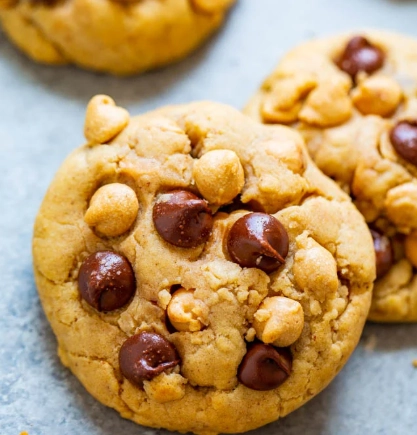
This isn't just another recipe. It's the combined wisdom of dozens of batches, failed experiments, and happy taste-testers (mostly my neighbors, who got very fat that month). We're going to talk about the science, the shortcuts, and the secrets that turn good cookies into unforgettable ones. Whether you're a baking newbie or you've got flour in your veins, there's something here for you.
Why This Recipe Works (And Others Don't)
Most recipes for chocolate chip peanut butter cookies fall into one of two traps. They either lean too hard on the peanut butter, making a dry, crumbly cookie that sticks to the roof of your mouth, or they're just a basic chocolate chip cookie with a token spoonful of peanut butter that you can barely taste. The goal is harmony. You want that unmistakable, roasty peanut butter flavor in every bite, paired with the sweet, melty pockets of chocolate, all held together in a cookie that's got the perfect texture—crisp at the very edges, chewy in the middle, soft in the center.
The magic lies in the ratios and a couple of non-negotiable techniques. We use a mix of brown and white sugars for depth and moisture. The type of peanut butter is critical (more on that in a second). And chilling the dough? It's not a suggestion. It's the law. It prevents the cookie pancake phenomenon and allows the flavors to really get to know each other.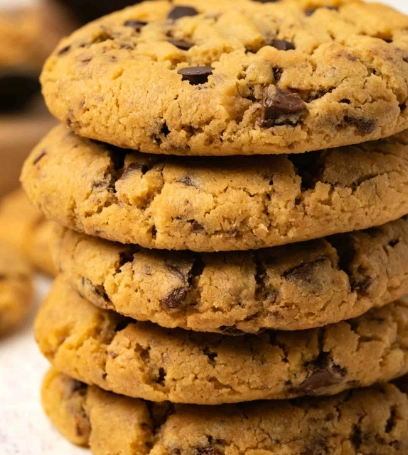
Your Shopping List: Choosing the Right Ingredients
Great cookies start before you even turn on the oven. The ingredients you choose will make or break your chocolate chip peanut butter cookies. Let's break down each one.
The Core Cast of Characters
- Peanut Butter: This is the star. You want a commercial, processed peanut butter like Jif or Skippy. I know, I know. The natural stuff is healthier. But for cookie structure and consistent flavor, the stabilized kind with added oils and sugars is what gives you that classic, chewy texture. The National Peanut Board confirms that the consistency of processed peanut butter is key for predictable baking results. If you must use natural, you'll need to adjust the flour, and honestly, the flavor and texture just aren't the same.
- Butter: Unsalted, and softened correctly. Not melted, not rock-hard. You should be able to press your finger into it and leave a clear indent. This creams perfectly with the sugar to create air pockets for lift.
- Sugars: A 50/50 split of light brown sugar and granulated white sugar. The brown sugar brings molasses notes and moisture for chew. The white sugar helps with spread and crispness.
- Flour: All-purpose is the way to go. Spoon it into your measuring cup and level it off. Don't scoop directly from the bag—you'll pack in too much flour and end up with dry cookies.
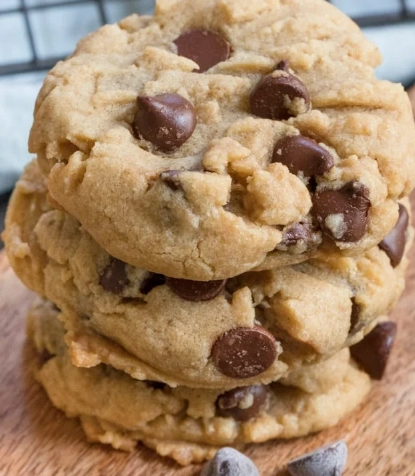
- Chocolate: This is personal. Chips are convenient and hold their shape. Chopped chocolate bars create gorgeous, irregular puddles of chocolate. I prefer a mix of semi-sweet and milk chocolate chips. Dark chocolate can be overpowering against the peanut butter.
| Ingredient | Best Choice for Flavor | Best Choice for Structure | Common Pitfall |
|---|---|---|---|
| Peanut Butter | Processed, Creamy (e.g., Jif Creamy) | Same. Provides fat & protein for chew. | Natural, oily peanut butter causes spreading & greasiness. |
| Butter | Unsalted, High-fat European-style | Standard unsalted butter, properly softened. | Using melted butter or margarine. |
| Chocolate | Chopped high-quality bars | Standard chocolate chips (hold shape) | Using chocolate that's too low in cocoa butter. |
| Flour | Unbleached All-Purpose | Bleached All-Purpose (slightly softer) | Measuring with the scoop-and-pack method. |
The Foolproof Step-by-Step Recipe
Here it is. The blueprint. Follow these steps, and you're golden.
See? Not so hard. The waiting is the toughest part.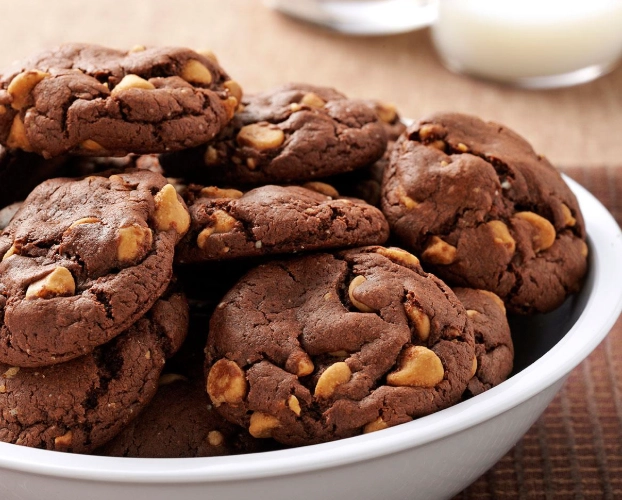
Baking & Shaping: The Final Hurdle
Preheat your oven to 375°F (190°C). Line your baking sheets with parchment paper. Silicone mats are okay, but I find parchment gives a slightly better bottom crust.
Use a cookie scoop (about 2 tablespoons worth) to portion the dough. Roll it into a tall ball, not a perfect sphere. Place them on the sheet about 2 inches apart. For an extra touch, press a few extra chocolate chips onto the top of each dough ball right before baking—it makes them look bakery-perfect.
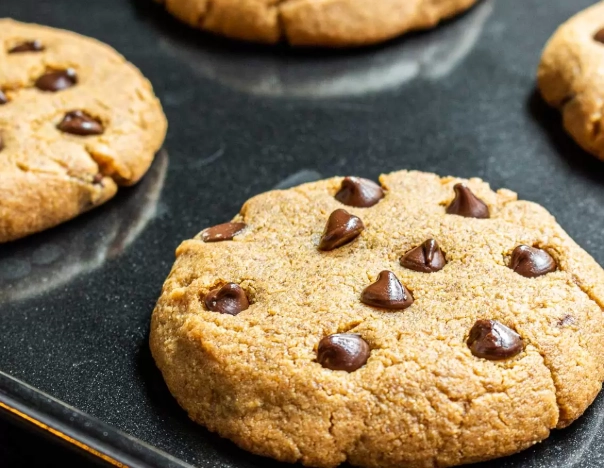
Bake for 9-11 minutes. Here's the tricky part: they will look underdone. The centers will be soft and puffy, and the edges will just be starting to set. That's perfect. They will continue to cook on the hot baking sheet. Let them cool on the sheet for 5 full minutes before transferring to a wire rack to cool completely. This sets their structure.
Texture Troubleshooting: Fixing Common Problems
So your cookies didn't turn out? Let's diagnose it.
- Problem: Cookies spread too much, thin and flat.
Likely Cause: Dough was too warm. Butter was melted or too soft. Not enough flour (did you measure correctly?). Dough wasn't chilled. Baking sheet was still warm from a previous batch.
Fix for Next Time: Chill longer. Ensure ingredients are correct temperature. Use an oven thermometer to check your oven isn't running cold. - Problem: Cookies are dry, crumbly, and cakey.
Likely Cause: Too much flour (the #1 baking mistake). Overmixing the dough after adding flour. Overbaking.
Fix for Next Time: Spoon and level flour. Mix just until combined. Set a timer and trust it—pull them out when they look slightly underbaked. - Problem: Cookies are too hard.
Likely Cause: Too much white sugar relative to brown sugar. Overbaking.
Fix for Next Time: Check sugar ratios. Store cookies in an airtight container with a piece of bread—the cookies will steal moisture from the bread and soften up.
Advanced Variations & Fun Twists
Once you've mastered the classic chocolate chip peanut butter cookies, the world is your oyster. Here are some crowd-pleasing variations.
The Peanut Butter Cup Spectacular: Instead of chocolate chips, chop up full-size peanut butter cups and fold them in. Press a mini peanut butter cup into the top of each dough ball before baking. It's over-the-top in the best way.
The Salty-Sweet Masterpiece: Use a mix of semi-sweet chocolate and peanut butter chips. Right when the cookies come out of the oven, immediately sprinkle the tops with a few flakes of Maldon sea salt. The contrast is incredible.
The Stuffed Cookie: Take two portions of dough, flatten them slightly. Place a small square of a frozen peanut butter cup or a dollop of extra peanut butter in the center of one. Place the other piece of dough on top and seal the edges. Bake as usual. A gooey, surprise center awaits.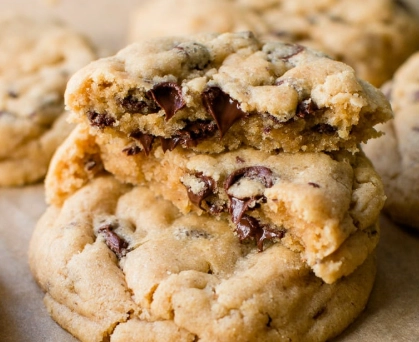
Storing, Freezing, and Gifting Your Cookies
A perfect cookie is a treasure that must be protected.
Storing at Room Temperature: Once completely cool, store in an airtight container at room temperature. They'll stay fresh and soft for up to 5 days. That piece-of-bread trick really works to maintain moisture.
Freezing Dough: This is the ultimate life hack. Portion the dough balls, place them on a parchment-lined tray, and freeze solid (about 1 hour). Then transfer the frozen dough balls to a zip-top freezer bag. They'll keep for up to 3 months. You can bake them straight from frozen—just add 1-2 minutes to the baking time. Fresh, warm cookies on demand.
Freezing Baked Cookies: Let baked cookies cool completely, then layer them between sheets of parchment in an airtight container. Freeze for up to 2 months. Thaw at room temperature or warm briefly in a 300°F oven.
For gifting, I like to use a paper bag or a cookie tin lined with wax paper. Tie it with some twine. A homemade batch of chocolate chip peanut butter cookies is a gift that never fails to impress.
Your Chocolate Chip Peanut Butter Cookie Questions, Answered
Final Thoughts from My Kitchen to Yours
Baking is part science, part art, and wholly satisfying. A great batch of chocolate chip peanut butter cookies has the power to turn a bad day around, to become the centerpiece of a family gathering, or to simply be a quiet, delicious treat with a glass of milk.
This guide gives you the tools. The precise recipe, the why behind each step, and the fixes for when things go sideways. But don't be afraid to make it your own. Prefer dark chocolate? Go for it. Want to add a teaspoon of espresso powder to deepen the flavor? Brilliant.
The best cookie is the one you love to eat. So preheat that oven, get your ingredients ready, and bake with confidence. You've got this. And when you pull that first perfect tray out of the oven, you'll know it was worth every minute.
Reader Comments