You grab a spoonful of peanut butter, maybe for a quick snack or to top your morning toast. It feels like a healthy choice—good protein, some fat. But if you're watching your carbohydrate intake, whether for keto, diabetes management, or just general health, that simple question pops into your head: how many carbs does peanut butter have? The answer isn't as straightforward as you might think. A standard two-tablespoon serving can range from a mere 3 grams of net carbs to over 15 grams, depending entirely on what's in the jar. I've spent years as a nutrition consultant, and the confusion around this is real. Let's clear it up.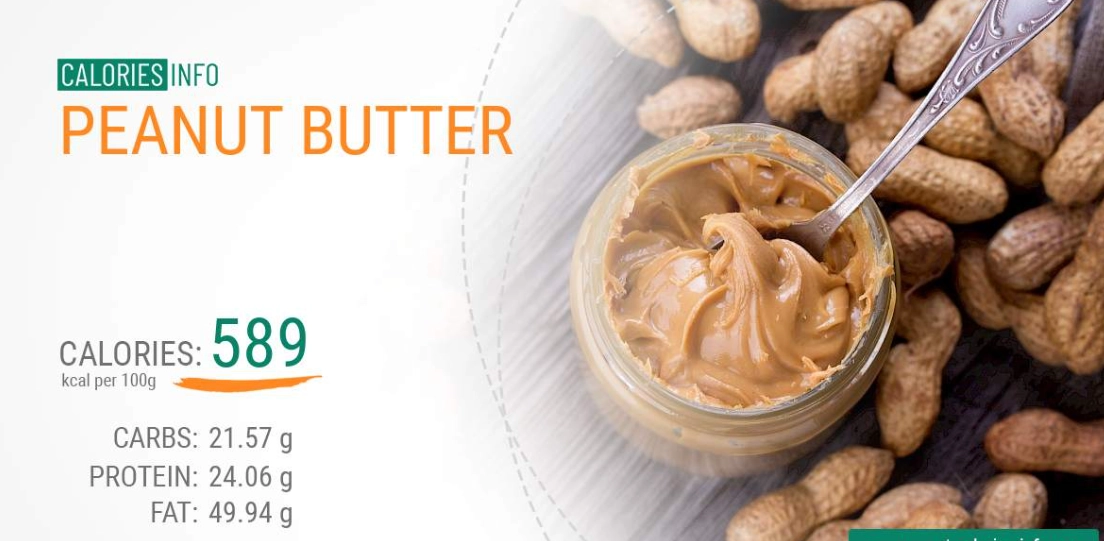
Your Quick Peanut Butter Carb Guide
The Exact Carb Count in Peanut Butter
Let's get to the numbers first. The carb content hinges on one major factor: added ingredients. Pure, blended peanuts have a predictable profile. The moment you add sugar, honey, or fillers, the math changes completely.
I always tell my clients to start with the baseline. According to the USDA FoodData Central, 100 grams of plain, oil-roasted peanuts contain about 16 grams of carbohydrates, with 8 grams of that being fiber. That gives us a net carb (total carbs minus fiber) baseline of around 8 grams per 100g of peanuts.
Now, translate that to a typical serving. Here’s a breakdown you won't find summarized like this elsewhere:
| Peanut Butter Type | Serving Size (2 tbsp / 32g) | Total Carbs | Dietary Fiber | Net Carbs | Key Differentiator |
|---|---|---|---|---|---|
| Natural (Peanuts & Salt Only) | 2 tbsp | 6g | 2g | 4g | Oil separation, no added sugar. |
| "No-Stir" Natural | 2 tbsp | 7g | 2g | 5g | Contains palm oil or other stabilizers to prevent separation. |
| Conventional (Jif, Skippy) | 2 tbsp | 15g | 2g | 13g | Contains added sugar (often 2-4g per serving) and hydrogenated oils. |
| Powdered (PB2) | 2 tbsp (12g powder) | 5g | 2g | 3g | Fat removed, often has added sugar. Must be reconstituted. |
| Reduced Fat | 2 tbsp | 18g | 2g | 16g | Fat is replaced with extra sugar and starches (like corn syrup solids). |
See the trap? The "Reduced Fat" version is the absolute worst for carb counters. Brands remove fat for marketing, but to make it taste good, they pump in more sugar and fillers. You end up with a product that's higher in carbs and less satisfying.
A common mistake I see is people buying "natural" peanut butter thinking it's automatically zero-carb. It's not. Peanuts are legumes and contain carbohydrates naturally. The fiber helps, but those net carbs still count towards your daily total.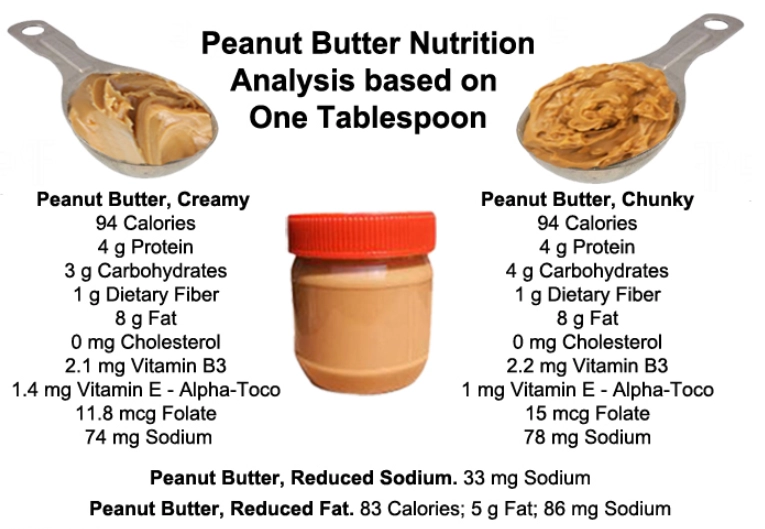
How to Choose a Truly Low Carb Peanut Butter
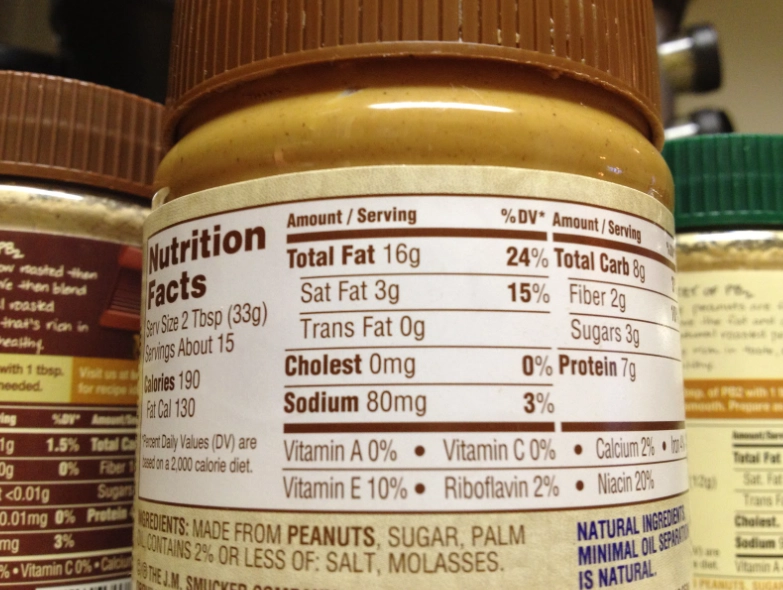
Reading the label is non-negotiable. Don't just look at the front that says "Natural" or "No Sugar Added." Turn the jar around.
The 2-Step Label Check:
1. Ingredients List: It should say "Peanuts, Salt." That's it. Maybe "Peanuts" alone. If you see "Sugar," "Cane Syrup," "Honey," "Molasses," or "Palm Oil" (unless you're okay with stabilizers), put it back. "Roasted Peanuts" is fine.
2. Nutrition Facts: For a 2-tablespoon (32g) serving, aim for:
- Total Carbohydrates: 7g or less.
- Dietary Fiber: At least 2g.
- Sugars: 1g or 2g (this is the natural sugar from peanuts). Anything above 2g of sugar usually means added sugar.
Brands like Smucker's Natural, Crazy Richard's, and Trader Joe's (the salted creamy one with just peanuts and salt) are reliable picks. The oil separation is a good sign—it means they didn't add stabilizers to manipulate the texture.
Carbs vs. Overall Nutrition: What Really Matters
Focusing solely on carb count is a rookie error. Peanut butter's value isn't just in its low carb potential; it's in the package. You have to consider the fats, proteins, and micronutrients.
Let's compare two hypothetical choices for a low-carb dieter:
- Choice A (Powdered): 3g net carbs, 1g fat, 5g protein.
- Choice B (Natural): 4g net carbs, 16g fat (mostly healthy monounsaturated), 8g protein.
While the powdered version "wins" by 1 gram of net carbs, the natural version provides sustained energy and satiety from its healthy fats and higher protein. That keeps you full for hours, preventing mindless snacking on truly high-carb foods later. The fat in natural peanut butter also helps with the absorption of fat-soluble vitamins.
I've had clients switch to powdered peanut butter to save on carbs and calories, only to find themselves hungry an hour later and reaching for a bag of chips. The minimal fat content fails to trigger the same satiety signals.
Peanut Butter Carbs in Keto & Diabetic Diets
This is where portion control becomes critical.
For Keto Dieters: Yes, natural peanut butter can be keto-friendly. With ~4g net carbs per serving, it can fit into a sub-20g daily net carb limit. But here's the subtle mistake: people often double the serving without thinking. A "heaping" tablespoon can easily be 1.5 or 2 servings. That's 6-8g net carbs from your peanut butter alone. Measure it, at least initially. Also, beware of flavored peanut butters (cinnamon, chocolate) as they almost always contain added sugars or artificial sweeteners that can stall some people.
For Diabetics or Blood Sugar Management: The combination of fat, protein, and fiber in natural peanut butter causes a very slow, gradual rise in blood sugar. This is excellent. The glycemic index is low. However, the conventional kind, with its added sugar, can cause a sharper spike. Pairing even a small amount of natural peanut butter with a carbohydrate (like an apple or whole-grain cracker) is a brilliant strategy—the fat and protein blunt the blood sugar response from the carb.
Practical Serving Ideas That Respect the Carb Count
- Keto Fat Bombs: Mix 1/4 cup natural peanut butter (4 tbsp) with 2 tbsp melted coconut oil, a little cocoa powder, and a keto-friendly sweetener. Freeze in molds. Each piece has minimal added carbs.
- Diabetic-Friendly Snack: 1 tbsp natural peanut butter (2g net carbs) on celery sticks. The fiber from the celery adds to the mix.
- Post-Workout: A smoothie with a scoop of protein powder, 1 tbsp peanut butter, unsweetened almond milk, and a handful of spinach. The carbs are controlled and the protein is high.
You see, it's not about avoidance, but intelligent inclusion.
Your Peanut Butter Carb Questions Answered
Is peanut butter okay for a strict ketogenic diet?
It can be, but it's a "budget" item. A strict keto diet prioritizes very low net carbs (often under 20g daily). One measured serving of natural peanut butter uses about 4g of that budget. The risk is its palatability—it's easy to overeat. I recommend treating it as a condiment or a specific recipe component, not a food you eat from the jar, especially in the adaptation phase.
Why do some natural peanut butters have more carbs than others?
Minor variations come from the peanut variety and roast level. But a significant jump usually indicates a hidden ingredient. "No-stir" naturals often contain a small amount of tapioca starch or other carbohydrate-based stabilizers to bind the oil. Always check the fiber content too. If total carbs are 7g but fiber is only 1g, that's a worse net carb profile than one with 7g carbs and 3g fiber.
 How does almond butter compare to peanut butter in carbs?
Almond butter is often slightly lower. A 2-tbsp serving of natural almond butter typically has around 6g total carbs and 3g fiber, yielding 3g net carbs. It's a great alternative, but it's usually more expensive. The nutritional difference isn't massive, so choose based on taste, budget, and any specific allergies.
Can I eat peanut butter if I'm trying to lose weight and counting carbs?
Yes, but you must account for its calorie density. At about 190 calories and 16g of fat per serving, those calories add up quickly, even if the carbs are low. Weight loss still hinges on a calorie deficit. Use it as a flavor and satiety tool—a tablespoon in oatmeal, a smear on a rice cake—not as a primary calorie source.
What's the deal with "net carbs" on peanut butter labels?
In the U.S., "net carbs" is not a regulated term on Nutrition Facts labels. Some brands calculate it for you (Total Carbs - Fiber - Sugar Alcohols). You should do the math yourself using the official numbers: Net Carbs = Total Carbohydrates - Dietary Fiber. For peanut butter, sugar alcohols are rarely a factor, so it's a simple subtraction.
So, how many carbs does peanut butter have? The honest answer is: it's up to you. By choosing a jar with just peanuts (and maybe salt), you're looking at a modest 3-5 grams of net carbs per serving—a manageable amount for most low-carb lifestyles. The real carb culprits are the added sugars and fillers hiding in conventional and reduced-fat varieties. Your best strategy is to become a label detective, measure your servings, and enjoy this delicious, nutritious food as part of a balanced approach. Now you know exactly what to look for.
Reader Comments