You grabbed a jar of peanut butter, maybe to make a sandwich, maybe just for a spoonful straight from the source. Then the question hits: just how many calories are in this whole thing? It's a smart question. Knowing the total lets you plan, budget, and enjoy without the guesswork. The short answer is that a standard 16-ounce (454-gram) jar of regular peanut butter contains roughly 2,600 to 2,900 calories. But that number is almost meaningless on its own. The real story is in the serving size, the type of peanut butter, and how you fit it into your day without stress.
What You'll Find in This Guide
- The Straight Answer: Calories in a Jar of Peanut Butter
- Why the Serving Size on the Label is a Lie (For Most of Us)
- Calories by Brand and Type: A Detailed Breakdown
- How to Accurately Measure a Serving of Peanut Butter
- How to Enjoy Peanut Butter Without Derailing Your Diet
- Your Peanut Butter Calorie Questions, Answered
The Straight Answer: Calories in a Jar of Peanut Butter
Let's cut to the chase. A typical jar you find in an American supermarket is 16 ounces, which is 454 grams. Here’s the math based on the standard nutrition label, which uses a 2-tablespoon (32-gram) serving containing about 190-210 calories.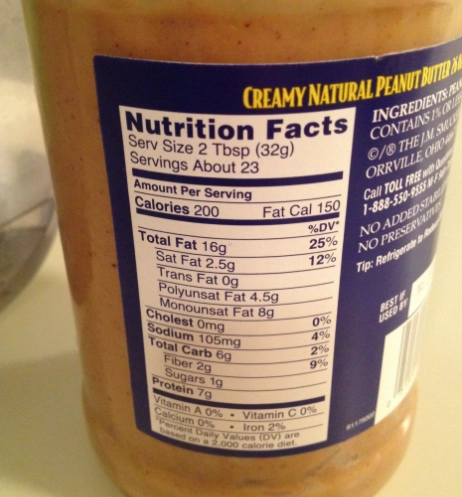
Total Calories in a 16oz Jar ≈ (190 to 210 calories per serving) × (14 servings per jar)
That puts the total calorie count squarely between 2,660 and 2,940 calories.
Think about that for a second. That's more than many people's recommended daily intake, all sitting in one glass container. It sounds intimidating, but here's the first expert tip: Nobody eats a jar in one sitting. The jar is just the container. The unit that matters, the one that impacts your health and weight, is the serving. And almost everyone gets the serving size wrong.
Why the Serving Size on the Label is a Lie (For Most of Us)
The label says "2 tbsp (32g)." That's the FDA's reference amount. But when was the last time you measured peanut butter with an actual tablespoon? Most people use a regular eating spoon, which can hold 1.5 to 2 times that amount. A heaping spoonful can easily be 3 tablespoons.
Here's the reality check: If you're just eyeballing it, your "one spoonful" could be 300-400 calories, not the 190 you logged in your app. This single mistake is why people think healthy foods are "making them gain weight." It's not the peanut butter; it's the portion creep.
I learned this the hard way years ago. I was diligently having a "serving" of natural peanut butter every afternoon. After a month with no progress, I finally weighed it. My "quick spoonful" was consistently 50 grams—over 300 calories. I was accidentally adding nearly an extra 100 calories a day just from misjudging one food.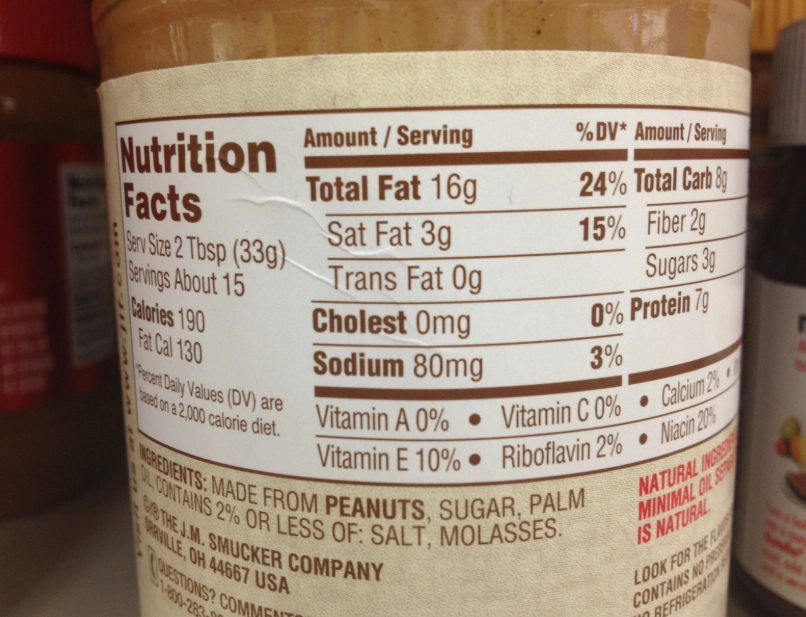
Calories by Brand and Type: A Detailed Breakdown
Not all jars are created equal. "Regular" (with added sugar and hydrogenated oils), "Natural" (just peanuts and salt), and "Powdered" peanut butter have vastly different calorie densities. This table breaks down popular options. Data is sourced from the USDA FoodData Central database and official brand nutrition labels.
| Peanut Butter Type (Brand Example) | Calories per 2 Tbsp (32g) Serving | Approx. Servings per 16oz Jar | Total Calories in the Jar |
|---|---|---|---|
| Regular, Creamy (Jif, Skippy) | 190 - 200 | 14 | 2,660 - 2,800 |
| Natural, Stirred (Smucker's, Crazy Richard's) | 200 - 210 | 14 | 2,800 - 2,940 |
| Powdered (PB2, PB Fit) | 60 - 70 | ~24 (for 2 Tbsp powder) | 1,440 - 1,680 |
| Reduced Fat (Various) | 190 - 200 | 14 | 2,660 - 2,800 |
Notice something counter-intuitive? Natural peanut butter often has slightly more calories per serving. Why? Because it's just ground peanuts. The oil isn't partially hydrogenated, so it separates and is part of the serving. Regular brands often replace some peanut oil with stabilizers, which can slightly lower the fat (and thus calorie) content. Don't let that scare you off natural—the nutritional profile (healthy fats, no added sugar) is superior.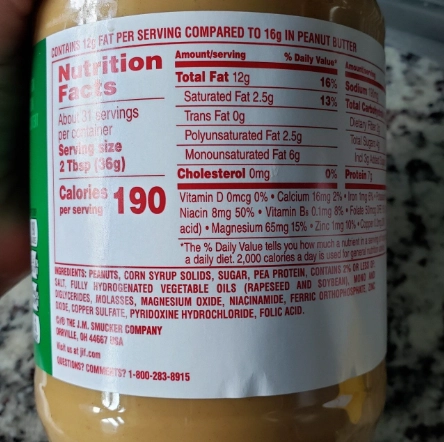
Watch out for "Reduced Fat" trickery: Check the label. Often, when they remove fat, they add more sugar or other carbs to compensate for taste. The calorie difference is usually negligible (as the table shows), but you're getting a less satisfying, more processed product. It's a marketing win, a nutritional side-step.
How to Accurately Measure a Serving of Peanut Butter
If you care about the calories, guessing is your enemy. Here are the only two methods I trust after years of coaching clients: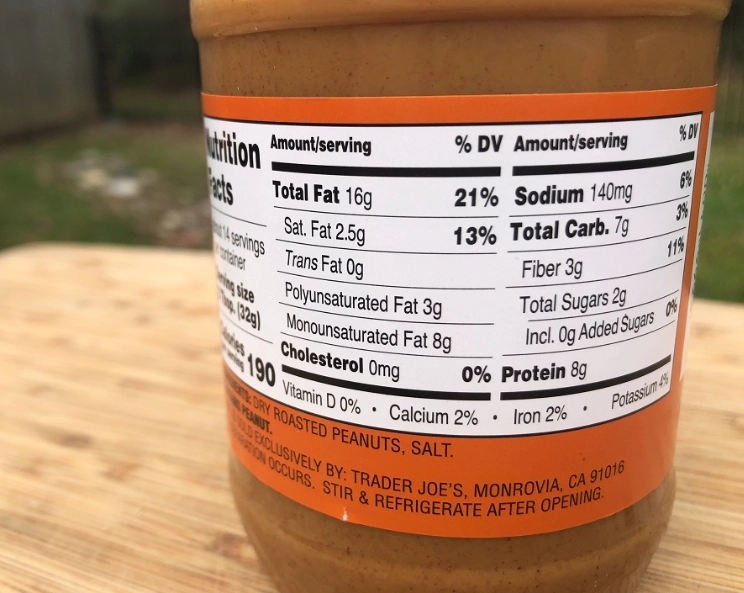
1. The Kitchen Scale Method (Gold Standard)
This is non-negotiable for accuracy. Place your bowl, bread, or spoon on the scale. Tare it to zero. Scoop your peanut butter until the scale reads 32 grams for a standard serving. You'll be shocked at how small a "true" 200-calorie serving looks compared to your usual scoop. Do this 5-10 times, and you'll recalibrate your eyes.
2. The Pre-Portioning Hack
When you open a new jar, immediately portion it out. Use a small cookie scoop (like a #60 scoop, which is about 1 tablespoon) or a measuring spoon to dollop servings onto a parchment-lined baking sheet. Freeze them solid, then pop the peanut butter "pucks" into a freezer bag. Grab one when you need it. It eliminates the "just one more little taste" problem.
Measuring cups and spoons are better than nothing, but peanut butter sticks to them, making it easy to under-count. A scale doesn't lie.
How to Enjoy Peanut Butter Without Derailing Your Diet
Peanut butter is energy-dense. That's a fact. But it's also packed with protein, healthy fats (mono- and polyunsaturated), fiber, and vitamins. The goal isn't to fear it, but to strategically pair it. Here’s how:
Pair with Volume Foods: Don't eat peanut butter from the spoon (too easy to overdo). Use your measured serving to enhance low-calorie, high-volume foods. Think:
- Stirred into plain Greek yogurt or oatmeal.
- Spread thinly on apple slices, banana, or celery sticks.
- Drizzled (warmed slightly) over a bowl of berries.
Think of it as a Fat/Protein Source, Not a Condiment: In a meal, treat that serving of peanut butter as your primary fat source. If you have a peanut butter sandwich, maybe skip the cheese on your salad for dinner. It's about balance across the day, not just in one snack.
Consider Powdered for Specific Uses: Powdered peanut butter (like PB2) is fantastic for when you want the flavor without the calorie density. Mix it into smoothies, protein shakes, or yogurt. It's not a full replacement—you miss the healthy fats—but it's a great tool in the toolbox.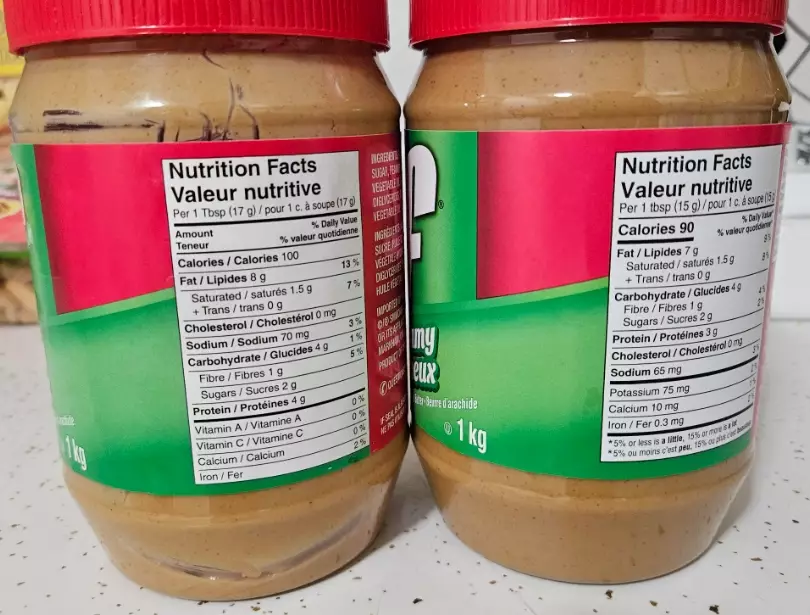
Your Peanut Butter Calorie Questions, Answered
So, the next time you pick up that jar, you won't see a daunting 2,800-calorie monolith. You'll see 14 individual, manageable servings of a delicious, nutritious food. You have the tools to measure it, the knowledge to compare types, and the strategies to enjoy it without fear. That's how you turn a simple question about calories into sustainable, smart eating.
Reader Comments