You're standing in the grocery aisle, staring at a wall of peanut butter jars. "All-natural," "Reduced Fat," "No Sugar Added." The claims shout at you. But the real truth, the unvarnished facts about what you're actually going to spread on your toast or blend into your smoothie, is hiding in plain sight on the side of the jar: the Nutrition Facts label.
Most people glance at it, maybe check the calories or protein, and move on. That's a mistake. I used to do the same until I spent a year working on a food labeling project. What I learned changed how I shop forever. Reading a peanut butter nutrition label isn't about memorizing numbers—it's about understanding a story. A story about fat quality, hidden sugars, and marketing tricks designed to make the mediocre look magnificent.
Let's read that story together.
Your Quick Guide to the Label
Understanding the Serving Size Trap
The very first line on the label is where many diets quietly derail. The serving size for peanut butter is typically 2 tablespoons (32g).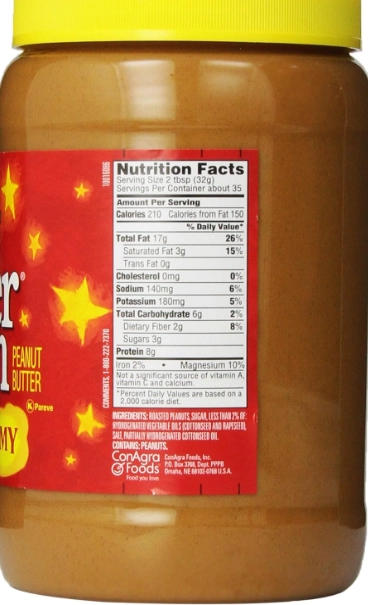
Go get a measuring spoon and look at it. That's it. That small mound is what all the calories, fat, and sugar numbers on the label refer to. The problem? Almost no one uses just one measured tablespoon. We swipe a knife across the jar. That "swipe" can easily be 3 or 4 tablespoons, doubling or tripling everything you see on the label without a second thought.
Why does a two-tablespoon serving look so small? Because peanut butter is energy-dense. Those 32 grams pack a punch—usually between 180 and 210 calories, most of it from fat. This isn't a reason to fear peanut butter; it's a reason to respect it and measure it, at least until your eye is trained.
Pro Tip: Don't just read the calories per serving. Look at the calories from fat right below it. In a good peanut butter, 70-80% of the calories will come from fat (the healthy kind). If that percentage is much lower, suspect added fillers or sugars bulking up the jar.
The Fat Profile: It's Not All Bad
This is the section that causes the most confusion and unnecessary fear. Peanut butter is a high-fat food. That's its nature. The key is what kind of fat.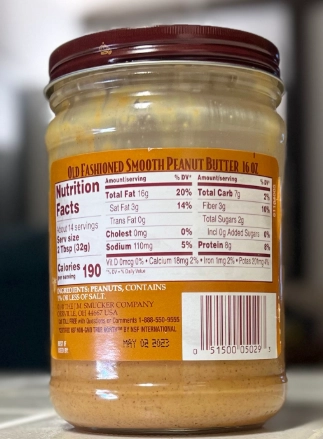
- Total Fat: This is just the sum. 16-18 grams per serving is standard. Don't panic at this number alone.
- Saturated Fat: Usually around 2-3.5g. This is the fat we're advised to limit. In the context of an otherwise healthy diet, this amount in peanut butter is reasonable. It's not the enemy here.
- Trans Fat: This is the real villain. By law, if a serving contains less than 0.5 grams, it can be rounded down and listed as "0g." But even tiny amounts are harmful. You must check the ingredients list. If you see "partially hydrogenated oils," put it back. It has trans fat, label be damned.
The majority of fat in peanut butter is monounsaturated and polyunsaturated fat—the heart-healthy kinds. The label doesn't break these out, but you can assume if saturated and trans fats are low, the rest is the good stuff. This is why choosing a peanut butter with just peanuts (and maybe salt) gives you the optimal fat profile.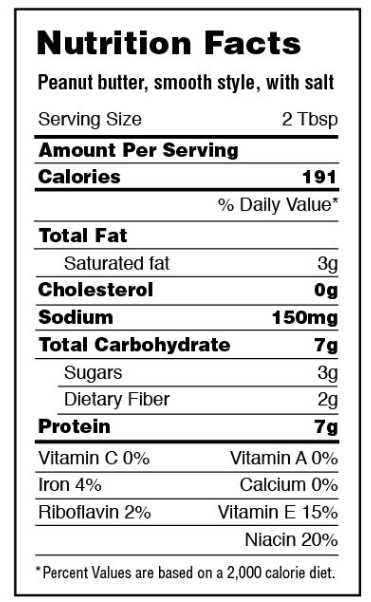
Protein and Fiber: The Satiety Duo
This is where peanut butter earns its keep as a pantry staple.
- Protein: Expect 7-8 grams per serving. That's solid. It's not a complete protein (lacks sufficient methionine), but it's a great plant-based contributor that helps keep you full.
- Dietary Fiber: Aim for at least 2 grams, but 3 grams is better. Fiber is crucial for gut health and slowing digestion, which stabilizes energy. If the fiber content is 1 gram or less, the peanut butter is likely made from overly processed peanuts where the fibrous parts have been stripped out.
I judge a peanut butter's quality heavily on this fiber number. High fiber means they kept more of the actual peanut in the jar.
The Sugar and Sodium Sneak Attack
Now we get to the sneaky stuff. This is where "regular" and "natural" peanut butters dramatically diverge.
- Total Sugars: This includes both natural sugars from the peanuts and any added sugars. Peanuts themselves have about 1-2 grams of natural sugar per serving.
- Added Sugars (The New, Critical Line): This is the number to laser-focus on. It tells you exactly how much sugar (like cane sugar, molasses, corn syrup) the manufacturer dumped in. For a truly healthy choice, this should be 0g. Many popular brands have 3-4 grams of added sugar per serving—that's nearly a full teaspoon of sugar in two tablespoons of spread.
- Sodium: Salt is added for flavor and preservation. A pinch is fine. Look for under 100mg per serving. "No Salt Added" varieties will have 5mg or less (just from the peanuts themselves). If the sodium is over 150mg, it's getting salty.
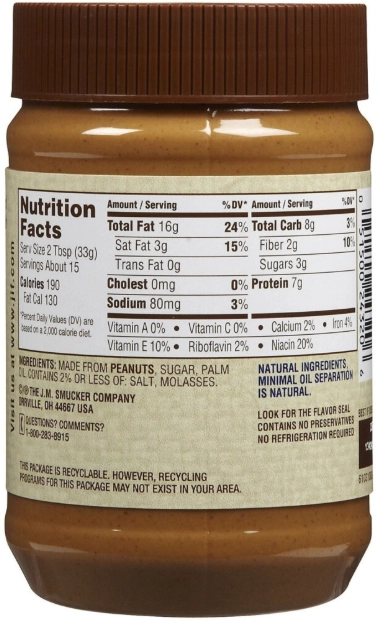
Watch Out: "Reduced Fat" peanut butter is almost always a nutritional trap. To make up for the lost flavor and texture from removing fat, manufacturers add more sugar and refined carbohydrates. You often end up with more sugar, similar calories, and a less satisfying product. I always choose full-fat.
Ingredients List: The Truth Behind the Label
The Nutrition Facts panel gives you the numbers, but the Ingredients List gives you the story behind them. Ingredients are listed by weight, from most to least.
The Gold Standard: Peanuts. Or Peanuts, Salt. That's it. This is what you want.
The Red Flags:
- Added Sugars: Sugar, Cane Sugar, Dextrose, Molasses, Corn Syrup Solids.
- Unhealthy Fats: Partially Hydrogenated Oils (trans fat), Fully Hydrogenated Oils, Palm Oil (often added for cheap texture and to prevent oil separation).
- Fillers and Stabilizers: Soy Protein, Cornstarch, Mono- and Diglycerides. These are used to cheapen the product and alter texture. They add no nutritional value.
A long ingredients list is a warning sign. Peanut butter doesn't need help being peanut butter.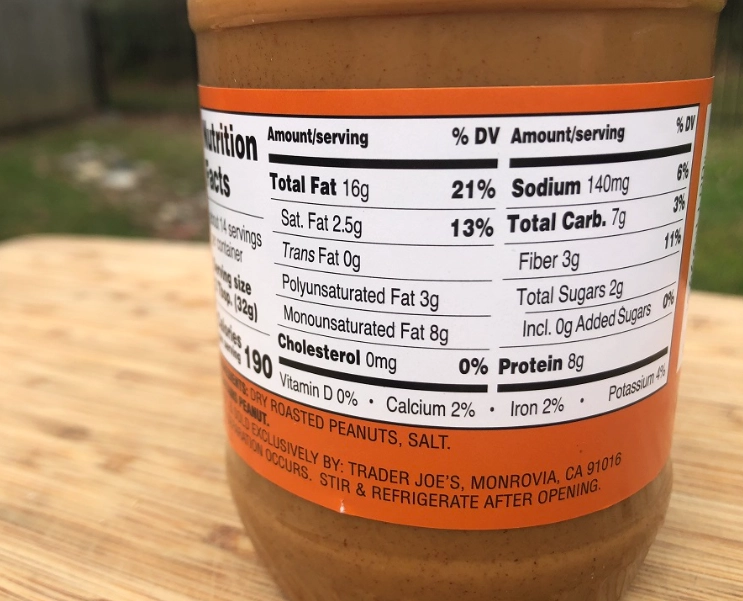
The Peanut Butter Showdown: A Label Comparison
Let's put this knowledge to work. Imagine you're comparing three jars on the shelf. Here’s what a simplified breakdown of their labels might tell you:
| Type / Brand (Example) | Serving: 2 Tbsp (32g) | Key Nutrition Facts | Ingredients List (Simplified) | The Verdict |
|---|---|---|---|---|
| Conventional "Regular" | Calories: 190 Fat: 16g Sat Fat: 3g Trans Fat: 0g Carbs: 8g Fiber: 2g Sugars: 3g (3g Added) Protein: 7g Sodium: 150mg |
Added sugar present. Higher sodium. "0g Trans Fat" claim. | Peanuts, sugar, hydrogenated vegetable oils (soybean, cottonseed), salt, molasses. | Avoid. Contains unhealthy hydrogenated oils (likely some trans fat) and added sugar. |
| "Natural" (Stir-Preferred) | Calories: 200 Fat: 17g Sat Fat: 2.5g Trans Fat: 0g Carbs: 6g Fiber: 3g Sugars: 1g (0g Added) Protein: 8g Sodium: 65mg |
No added sugar. Higher fiber. Clean fat profile. | Peanuts, salt. | Winner. Pure, simple, optimal nutrition. Oil separation is normal—just stir. |
| Reduced Fat | Calories: 185 Fat: 12g Sat Fat: 2g Trans Fat: 0g Carbs: 15g Fiber: 2g Sugars: 4g (4g Added) Protein: 7g Sodium: 160mg |
Lower fat, but higher carbs and sugar. Similar calories. | Peanuts, corn syrup solids, sugar, pea protein, hydrogenated vegetable oil, salt, molasses. | Trap. More sugar, more processed ingredients, less satisfying healthy fat. |
See how the story changes? The "Natural" jar, while maybe having a few more calories, delivers a far superior nutritional package with no junk.
Armed with this knowledge, that grocery aisle becomes less confusing. You're no longer at the mercy of front-label marketing. You have the decoder ring—the Nutrition Facts label and the Ingredients List. Go for the short list: peanuts, maybe salt. Prioritize 0g Added Sugar and no hydrogenated oils. Respect the serving size.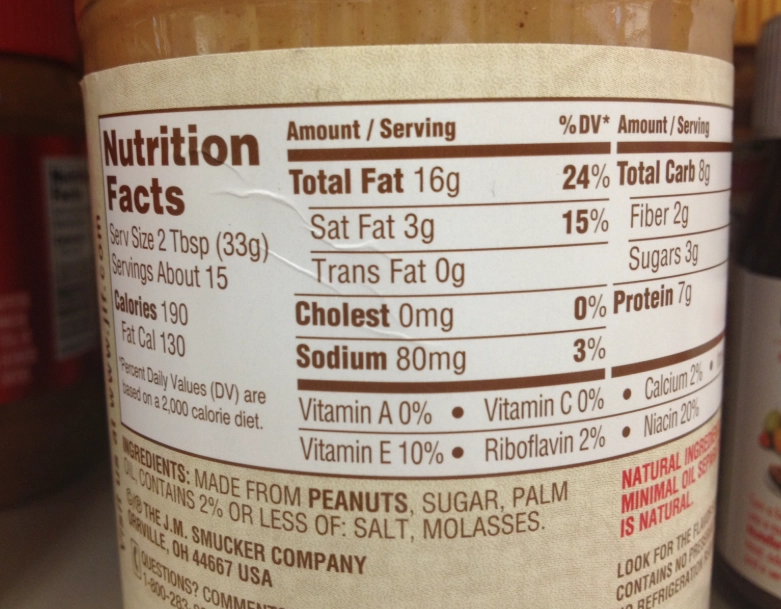
Your toast, your smoothies, and your health will thank you.
Peanut Butter Label Questions You Were Afraid to Ask
Which fat in peanut butter is actually bad for you?
What's the biggest difference on the nutrition label between natural and regular peanut butter?
For a keto or low-carb dieter, which number on the peanut butter label is most critical?
Is the protein in peanut butter a complete protein source?
Reader Comments