Quick Navigation
You know the feeling. You're standing in the grocery aisle, staring at a wall of peanut butter jars. Creamy, crunchy, natural, reduced fat—the options are endless. You pick one up, turn it around, and there it is: the peanut butter nutrition label. A tiny box filled with numbers and percentages that's supposed to tell you if this is a healthy choice. But honestly, does anyone really know what all that means? I remember the first time I tried to buy "healthy" peanut butter. I ended up with a jar that had more sugar than some cookies. Not great.
That's why we're going to break it down, piece by piece. Forget the confusing jargon. We're going to look at a peanut butter nutrition label like it's a map to better eating. It's not just about calories. It's about understanding what you're putting in your body, from the good fats to the sneaky additives. By the end of this, you'll be able to glance at a label and know instantly if it's a winner or if it belongs back on the shelf. Let's get into it.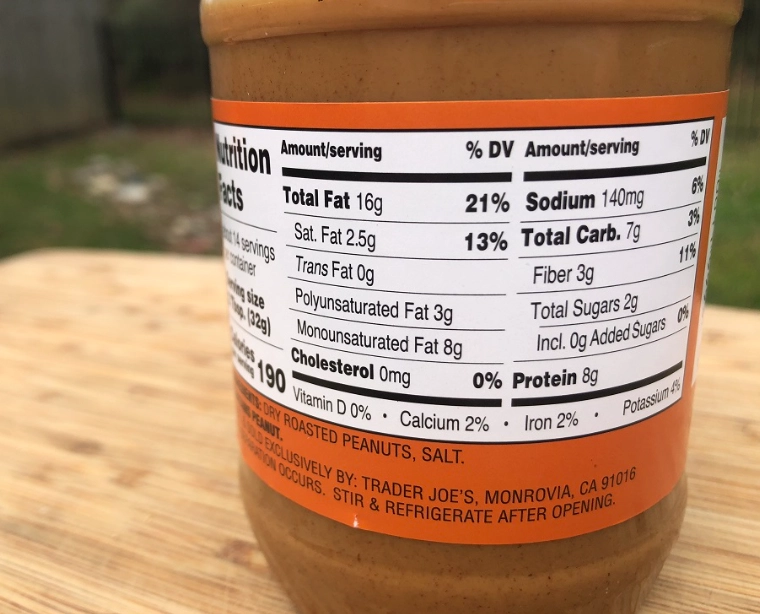
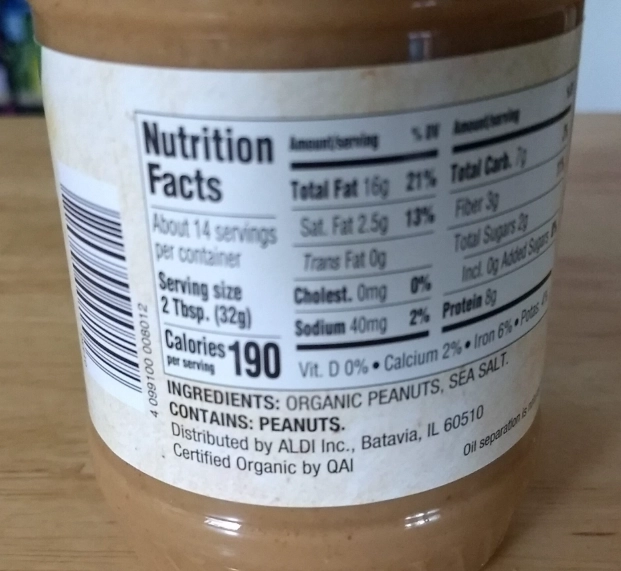
The Core Nutrition Facts Panel
This is the black and white box you see on every jar. It's regulated by the FDA to be standardized, which is helpful. But the numbers alone don't tell the full story. You have to know what to look for.
Serving Size: The Most Important Number You Might Ignore
Right at the top. This is where many people trip up. The serving size for peanut butter is typically 2 tablespoons (32g). Now, let's be real. Who measures out exactly two level tablespoons? I sure didn't used to. I'd just scoop a hefty spoonful onto my toast. That "hefty spoonful" was probably closer to 3 or 4 tablespoons. Suddenly, all the numbers on that peanut butter nutrition label double. The calories, the fat, the sugar—everything. It's the foundation. If you don't pay attention to the serving size, the rest of the label is meaningless.
Calories and Macronutrients: The Big Three
Under the serving size, you'll find calories, followed by fat, cholesterol, sodium, carbs, and protein. For peanut butter, the key players are fat, carbs (specifically fiber and sugar), and protein.
Total Fat (16g-18g per serving): Don't let this scare you. The fat in peanut butter is predominantly the good kind—monounsaturated and polyunsaturated fats. These are heart-healthy. The label will break it down into Saturated Fat and sometimes Trans Fat. You want the saturated fat to be relatively low (around 3g or less per serving) and trans fat to be 0g. A peanut butter nutrition label showing 0g trans fat is a good sign, as trans fats are the truly bad ones for heart health.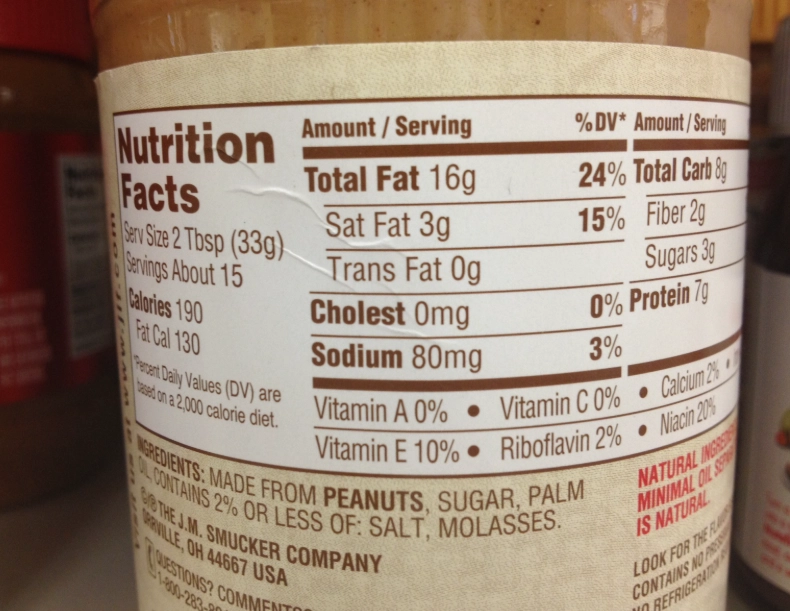
Total Carbohydrates (6-8g): Here's where you need to look at the breakdown. Dietary Fiber (2-3g) is your friend. It helps with digestion and keeps you full. Then there's Total Sugars. This is a critical number. In a perfect world, for a pure peanut butter, the sugar should only come naturally from the peanuts themselves, which is about 1-2 grams. Anything significantly higher means added sugar. We'll talk more about that monster in the ingredients section.
Protein (7-8g): This is one of peanut butter's superstar qualities. That 7-8 grams of plant-based protein per serving is what makes it such a satisfying and sustaining food. It helps repair muscles and keeps hunger at bay.
Vitamins and Minerals: The Supporting Cast
At the bottom of the nutrition facts panel, you'll see a list of vitamins and minerals. Peanut butter isn't a vitamin powerhouse like a multivitamin, but it does contribute meaningfully. You'll often see it as a good source of:
- Niacin (Vitamin B3): Important for energy metabolism and nervous system function.
- Vitamin E: A powerful antioxidant that protects your cells.
- Magnesium: Crucial for muscle and nerve function, blood sugar control, and bone health.
- Phosphorus: Works with calcium to build strong bones and teeth.
Some brands fortify their peanut butter with extra vitamins. If you see numbers like 10% or 20% of the Daily Value for things like Vitamin D or Calcium, that's added. It's not necessarily bad, but it's also not coming from the peanuts. The USDA FoodData Central is a fantastic resource if you want to dive deep into the exact nutrient composition of basic foods, including plain peanuts.
Beyond the Numbers: The Ingredient List
If the Nutrition Facts panel is the "what," the ingredient list is the "why." This is where the true character of your peanut butter is revealed. Ingredients are listed in descending order by weight. The first ingredient is what there's the most of.
Let's play a game. I'll describe two jars. You tell me which one is better.
Jar A Ingredient List: Peanuts.
Jar B Ingredient List: Roasted peanuts, sugar, hydrogenated vegetable oils (cottonseed, soybean, and rapeseed oil), salt, molasses.
It's obvious, right? Jar A is pure. Jar B has added sugar and, crucially, hydrogenated oils. Hydrogenation is a process that turns liquid oils into solids to prevent oil separation and extend shelf life. A byproduct of this process can be trans fats. Even if the nutrition label says "0g Trans Fat," if you see "hydrogenated" or "partially hydrogenated" oils in the ingredients, the product can contain up to 0.5 grams per serving and still be labeled as 0. That's a loophole. I avoid those like the plague.
The Usual Suspects in the Ingredient List
- Added Sugars: Can appear as sugar, cane sugar, evaporated cane juice, corn syrup solids, dextrose, or maltodextrin. They're there for one reason: to make it taste sweeter and more addictive. A little salt is fine for enhancing the natural peanut flavor, but added sugar is often unnecessary.
- Stabilizers & Emulsifiers: Palm oil (which is high in saturated fat but isn't hydrogenated) is often added to prevent the natural oil from separating. Some people hate having to stir natural peanut butter, so manufacturers add this to keep it creamy and mixed. It's a trade-off between convenience and purity. Hydrogenated oils do the same thing but are worse for you.
- Additives: You might see things like mono- and diglycerides (emulsifiers) or other preservatives in cheaper, mass-produced brands. They're not inherently toxic, but they're also not food. They're food science.
My personal rule? If I can't pronounce it or wouldn't have it in my kitchen cupboard, I don't want it in my peanut butter. Sticking to the simple lists changed the taste for me too. After a while, the heavily processed stuff starts to taste fake and overly sweet.
Comparing Different Types: A Handy Table
Let's put this all together. Here’s a breakdown of what you can typically expect from different styles of peanut butter, based on a standard 2-tablespoon serving. These are averages—always check your specific peanut butter nutrition label.
| Type of Peanut Butter | Calories | Total Fat | Saturated Fat | Total Carbs | Fiber | Sugars | Protein | Key Ingredient Tip |
|---|---|---|---|---|---|---|---|---|
| Natural (Peanuts Only) | ~190 | 16g | 2.5g | 7g | 3g | 1g (natural) | 8g | Ingredients: Peanuts. Oil separates on top. |
| Natural (Peanuts & Salt) | ~190 | 16g | 2.5g | 7g | 3g | 1g (natural) | 8g | Ingredients: Peanuts, Salt. Most common "healthy" find. |
| "No Stir" Natural | ~200 | 17g | 3.5g | 6g | 2g | 2g | 7g | Contains palm oil or other stabilizers to prevent separation. |
| Conventional Creamy (Jif, Skippy etc.) | ~190 | 16g | 3g | 8g | 2g | 3g | 7g | Contains added sugars, hydrogenated or palm oils. |
| Reduced Fat | ~190 | 12g | 2.5g | 15g | 2g | 4g | 8g | Fat is replaced with extra sugar and fillers (like corn syrup solids). Often a worse choice. |
What About Claims on the Front of the Jar?
The front of the jar is marketing. The back (the label) is truth. Here's how to translate common claims.
"Natural": This term is notoriously fuzzy. In peanut butter, it often just means no hydrogenated oils, but it can still contain palm oil, sugar, and other additives. You must check the ingredient list. The peanut butter nutrition label in the back tells the real story.
"Organic": This is a regulated term (USDA Organic). It means the peanuts were grown without synthetic pesticides and fertilizers. It says nothing about the nutritional profile. An organic peanut butter can still be loaded with added organic sugar and organic palm oil. Again, check the ingredients.
"Gluten-Free": Peanuts are naturally gluten-free, so almost all pure peanut butter is. This is often just a marketing sticker for people with sensitivities. It's good to see, but not a differentiator.
"Protein" or "High in Protein": All peanut butter has protein. This is just highlighting a natural feature. Don't pay extra for this claim alone.
"No Added Sugar" or "Unsweetened": Now this is a claim worth looking for. It means the sugars on the nutrition label are just the natural ones from the peanuts (1-2g). This is a great quick-filter in the store.
How to Actually Use This Info: A Step-by-Step Guide
Okay, theory is great. But what do you do in the store with only a few minutes? Here's my personal, no-nonsense routine.
- Flip the Jar Over Immediately. Ignore the pretty front label for now.
- Scan the Ingredient List. Look for one or two ingredients: Peanuts. Or Peanuts and Salt. If you see sugar or any hydrogenated oil in the top 3 ingredients, put it back. Seriously. This step takes 3 seconds and eliminates 70% of the options.
- Check the Sugars on the Nutrition Label. If it passed step 2, glance at "Total Sugars." If it's more than 2g, see if there's a better option. 3g might be okay if it's just from a touch of added salt or honey, but 0-2g is the gold standard.
- Consider Your Preference. Do you mind stirring? If you hate it, look for a "no-stir" natural that uses just palm oil (not hydrogenated) as a stabilizer. It's a decent compromise. I keep one of each at home—a pure one for recipes and a no-stir one for quick snacks.
Common Questions (The Stuff You Actually Google)
Final Thoughts: It's About Empowerment
Reading a peanut butter nutrition label isn't about becoming a nutrition fanatic. It's about making informed choices without stress. You don't need to memorize every number. Just remember the two-key filter: Ingredients (short and simple) and Sugar (low).
Once you start doing this, it becomes second nature. You'll find a brand or two you love, and you'll stick with them. For me, it was liberating to stop worrying about the fat and start enjoying the rich, real taste of peanuts without the sugary aftertaste. My toast has never been better.
The label is there to inform you, not confuse you. You've got the tools now to crack its code. Go forth and conquer that grocery aisle.
Reader Comments